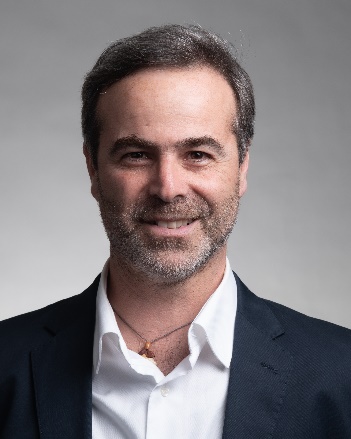
Pablo GBAgSc (AgEng), MSc, SAP, PhD, PAS, CFPG, Dipl ACAAB, Dipl ACAN, Dipl ACAS
Professor of Livestock Production and Agricultural Systems
Pablo joined Lincoln University (New Zealand) as Professor of Livestock Production in 2017, where he focuses on nutritional and behavioral management of grazing ruminants focusing on environmental protection, animal welfare, human health, and agricultural systems design. In April 2023, Pablo added Agricultural Systems to his professorship, now holding the Lincoln University Professorship of Livestock Production and Agricultural Systems. He Heads the Lincoln University Centre of Excellence “Future Productive Landscapes Design and the Directs the Lincoln University “Pastoral Livestock Production Lab”. Since then, he has attracted over 7 million dollars on research grants.
Pablo has authored over 250 peer-reviewed scientific journal articles, 5 international book chapters, edited 3 books in Nutritional Ecology of Foraging and Grazing Management, and written more than 400 conference papers/Abstracts/Tech notes for international professional meetings. He presented his work at more than 500 professional, research meetings, and academic institutions.
Pablo is associate editor of the journals ‘Animal Production Science’ (CSIRO Publishing, Australia) and ‘Grassland Science’ (Wiley-Blackwell, Publishing, Japan), Frontiers for Sustainable Food Systems (Frontiers org.), Environmental Nexus (Elsevier Publishing) and serves the Journal of Animal Science, Applied Animal Science Journal (American Association of Animal Science) and Nature (Sustainable Agriculture) as member of their editorial board.
Pablo is a member of the Forum of the Pastoralist Knowledge Hub (FAO), Livestock, Environment and Development, (LEAD-FAO), Gamma Sigma Delta Honor Society of Agriculture (USA), Knowledge Sharing Network for Animal Nutritionists (FAO), American Society of Animal Science (ASAS) and American Registry of Professional Animal Scientists (ARPAS), as well as the American Forage and Grassland Council (AFGC). Moreover, Pablo is a board member of and one of the original founders of the International Scientific Committee for Animal sourced foods and Livestock: Ethics, Planet and Health ALEPH. He has also been a member of the numerous Scientific Committees, e.g., International Symposium of Ruminant Physiology, International Symposium of Nutrition of Herbivores, and International Grazing Behavior Workshop. In 2018, Pablo was elected as the Chair of the International Scientific Advisory Groups for International Symposium of Nutrition of Herbivores. He is also a member of the International Scientific Committee on Farm systems Design. Recently, Pablo has been nominated and elected as Continuous Counselor of the International Rangelands Congress and appointed as Scientific & Technical Committee Advisor for the Rangelands Stewardship Council.
In addition to his research duties in New Zealand, Pablo is currently working on nutrition, foraging ecology, and grazing management of domesticated and wild ruminants in different grasslands and rangelands of the world. Finally, Pablo keeps close to a broader view of agricultural systems, which got him working on issues related to sustainability of agricultural systems around the world exploring the continuum of soil, plant, animal, population dynamics/ human health, as well as how phyto-chemistry and culture link the palates of humans and herbivores with landscapes in view of the design and creation of healthscapes.
Mission
Through transdisciplinary research, strategic engagement with industry, and academic leadership, Prof. Gregorini works to ensure that livestock, rangelands and grasslands evolve as regenerative socio-ecological infrastructures rather than extractive production platforms. His scholarship integrates nutritional ecology and farm systems science to position grazing lands as dynamic metabolic and cultural landscapes capable of enhancing not only productivity, but also ecosystem integrity and human health simultaneously.
His mission centres on advancing ethical evidence-based frameworks for agricultural systems that reconcile profitability with ecological stewardship and societal expectations. By collaborating closely with farmers, industry partners, policymakers, and indigenous communities, he seeks to co-design management strategies that enhance resilience, reduce environmental footprints, and strengthen rural livelihoods and health.
As a professor at Lincoln University and an active contributor to international scientific networks, Gregorini strives to shape a new grasslands and rangelands culture in which agricultural practices are recognized and understood as biogenic metabolic infrastructures aligned with long-term planetary boundaries. In his vision, agricultural transformation becomes a vehicle for climate adaptation, biodiversity restoration, ethical food production, sustainability and health.